


Articles

Article
What Is a Wick Bar & How to Use One for Candle Making
A wick bar is an essential tool in candle making that ensures your wick stays centered while the wax sets. Proper wick placement is key to achieving an even burn and preventing tunneling, making a wick bar a must-have for beginners and experienced candle makers. In this guide, we’ll cover a wick bar, its benefits, how to use one, and alternative methods for centering wicks.
What Is a Wick Bar?
A wick bar is a simple but effective tool designed to keep the wick centered and upright while candle wax cools and hardens. Typically made of metal, wood, or plastic, it rests across the top of a candle jar or mold, holding the wick in place to ensure proper alignment.
Using a wick bar helps prevent wicks from shifting, which can lead to uneven burning or wick displacement as the wax solidifies.
Why Use a Wick Bar?
Keeping wicks properly centered is crucial for candle performance. Here’s why a wick bar is beneficial:
Prevents Off-Center Wicks – Ensures even wax melting and avoids tunneling.
Improves Burn Quality – A well-placed wick promotes a steady flame and minimizes soot.
Reduces Waste – Helps maximize wax usage by maintaining an even burn.
Saves Time – Holds the wick in place without needing constant adjustments.
How to Use a Wick Bar: Step-by-Step Instructions
Using a wick bar is simple and effective. Follow these steps to get the best results:
Prepare Your Candle Jar or Mold – Secure the wick at the base with adhesive or a wick sticker.
Place the Wick Bar – Lay the wick bar across the top of the container, ensuring the wick fits into its slot or hole.
Adjust the Wick – Pull the wick taut but not too tight, keeping it centered.
Pour the Wax – Carefully pour melted wax into the container while the wick bar holds the wick in place.
Let It Set – Allow the wax to cool and harden before removing and trimming the wick bar.
Choosing the Right Wick Bar for Your Candle Jars and Molds
Not all wick bars are the same; choosing the right one depends on your candle-making setup. Consider these factors when selecting a wick bar:
Material – Metal wick bars are durable, while wooden or plastic options offer flexibility.
Size – Match the width of the wick bar to your container or mold to ensure proper support.
Wick Type – Some wick bars have multiple slots, making them ideal for double-wick or triple-wick candles.
Wick Bar Alternatives: Other Methods for Centering Wicks
If you don’t have a wick bar, you can use alternative methods to keep your wick centered:
Chopsticks or Clothespins – Secure the wick between two chopsticks or use a clothespin to hold it upright.
Pencil or Skewer – Wrap the wick around a pencil or skewer and rest it across the container.
Wick Centering Stickers – Adhesive wick holders can help keep wicks in place while wax cools.
Frequently Asked Questions About Wick Bars
Can I make a wick bar at home?Yes! If you’re wondering how to make a wick bar, you can use popsicle sticks, skewers, or clothespins to create a DIY wick holder.
Do I need a wick bar for every candle?While not mandatory, using a wick bar ensures consistency and prevents wick misalignment.
What happens if I don’t center my wick?An off-center wick can lead to uneven burning, wax tunneling, or excessive soot. A wick bar helps eliminate these issues.
Whether you’re new to candle making or looking to refine your technique, a wick bar is a simple yet powerful tool for achieving professional-quality results. Try different wick bar options and alternatives to find what works best for your candle-making process.
Article
Why Are My Candles Cracking?
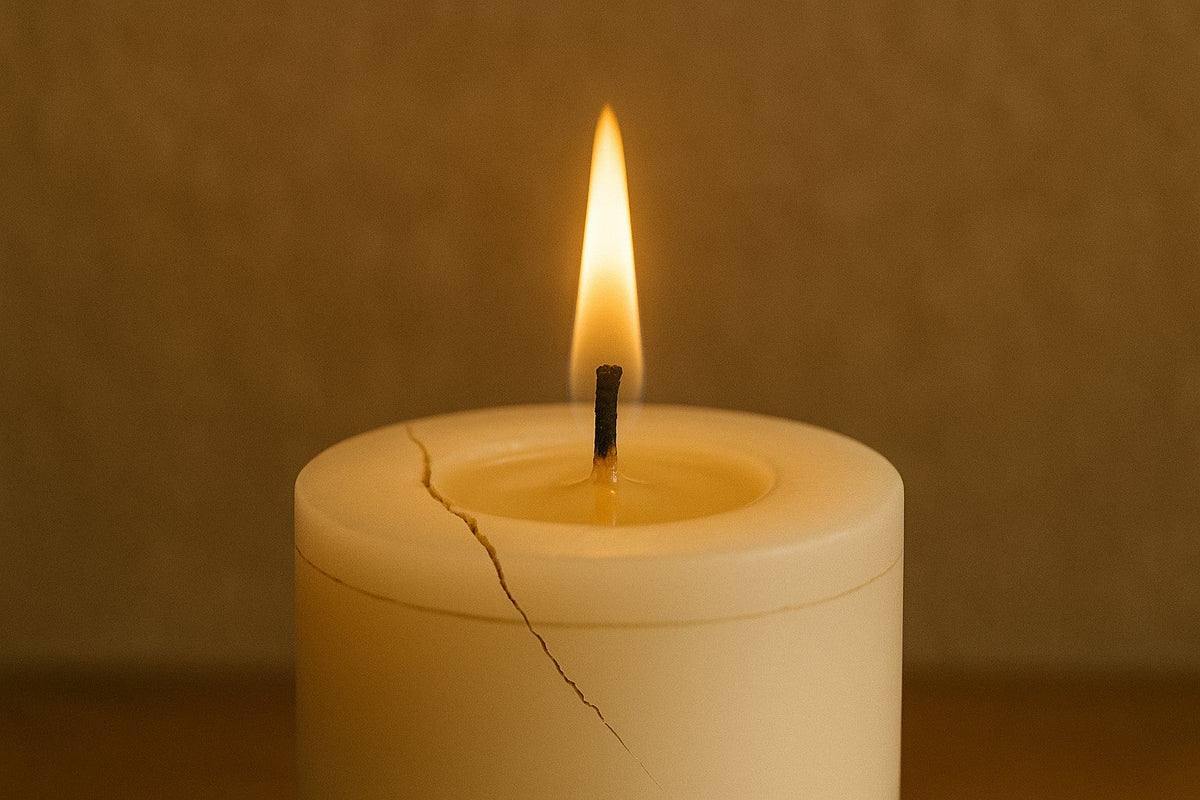
You pour a fresh batch of candles, everything looks fine, then the surface splits. A thin crack in a circle on the candle surface. Maybe a deep split across the top. So what’s going on?
Candle cracking is one of the most common issues in candle making, especially with soy wax. The good news? It’s usually cosmetic and completely fixable. But if you want smoother tops and a more professional finish, let’s break down what causes cracks, and how to prevent them.
Why Are My Candles Cracking?
Cracking happens when the wax cools too quickly or unevenly. As wax contracts while it sets, any sudden change in temperature can cause surface tension that leads to splits, especially on the top layer.
Other times, the issue starts before the pour: wax that’s too cool, equipment that’s too cold, or environmental shifts in the workspace can all contribute to the problem.
Common Causes of Cracks in Candles
1. Pouring Wax at the Wrong Temperature
If you pour too cool, the wax may begin setting before it fully levels out in the container. Soy wax is especially sensitive to temperature, and slow cooling helps prevent cracking.Try this: Stick within the recommended pour temp for your specific wax. For most soy waxes, that’s around 120°F–135°F. Too hot, and you risk frosting or sinkholes; too cool, and you’ll likely see cracks.
2. Cold Containers or Workspace
A cold jar, tin, or room can shock the wax as it hits the surface. That quick temp drop locks the top before the rest settles underneath, leaving you with a cracked candle top.Fix it: Pre-warm containers slightly with a heat gun or in a warm oven (under 100°F). Keep your workspace above 70°F when pouring.
3. Improper Cooling Conditions
If you move candles too soon, set them near a draft, or let them cool unevenly, the top layer can form cracks.Tip: Let your candles cool slowly in a stable, draft-free space. Don’t refrigerate them or place them on cold surfaces like stone counters.
Why Are My Homemade Candles Cracking More Often?
Homemade candles, especially soy, tend to crack more than paraffin-based blends because of how natural wax behaves. Soy wax expands and contracts more during the cooling process, making it more vulnerable to cosmetic flaws like frosting, rough tops, and cracking.
If you're working with a 100% soy wax blend, dial in your pour temp and container temp, and allow time for a gradual cool-down. Using a soy-paraffin blend or adding a small percentage of coconut wax can sometimes help with texture and finish.
How to Fix a Cracked Candle
If your candle cracked on top but everything else looks good, don’t toss it. Here are a few quick fixes:
Use a heat gun: Lightly reheat the top of the candle until the wax melts just enough to level out. This smooths over most surface cracks.
Top it off: If the crack is deep, melt a small amount of the same wax and pour a thin layer over the top to even it out.
Repour and remix (if needed): For persistent cracking, revisit your wax temp, container conditions, and any additives you’re using.
How to Prevent Candles from Cracking
Preventing cracks is about controlling your environment and knowing your materials. Here's what helps:
Keep pour temperatures consistent and in range
Pre-warm containers, especially in cooler months
Avoid drafts or extreme temperature swings
Allow slow, uninterrupted cooling
Use waxes with smooth finish characteristics if surface appearance is a priority

Article
Why Do Candle Wicks Mushroom and How To Prevent It?
If you've ever noticed a ball of carbon forming at the tip of your wick, like a tiny mushroom cap, that's called wick mushrooming. It's a common issue in both handmade and commercial candles, but with the right adjustments, it can be managed or prevented.
What Is Wick Mushrooming?
Wick mushrooming refers to carbon buildup at the tip of the wick during burning. It usually appears as a round or lopsided bulb and may cause the flame to flicker, lean, or burn too hot. You might also see extra smoke or soot forming on the jar or around the wick.
Why Do Candle Wicks Curl or Form a Bulb?
The curled shape is often part of the wick’s design to help it self-trim. But when too much wax is pulled into the flame, especially if the wick is oversized or the burn environment isn’t ideal, more fuel is delivered than the flame can fully combust. What’s left behind is that telltale mushroom-shaped tip.
What Causes Candle Wicks to Mushroom?
A few key factors make this issue more likely, especially in highly scented or long-burning candles.
Overwicking and Fragrance Load Impact
One of the most common causes of mushrooming is using a wick that is too large for the wax, container, or fragrance load. When a large wick draws up excess wax and fragrance oil, the flame burns too hot and can’t use all the fuel efficiently. The unburned carbon collects at the wick’s tip and forms the mushroom.
Heavy fragrance loads, especially those with complex blends or vanillin, can also influence burn behavior. Be sure to test your formulation carefully and consult IFRA usage rates to ensure you are within safe, stable ranges.
How to Prevent Wick Mushrooming
While it is not always possible to eliminate mushrooming entirely, a few burn and production habits can reduce how often it happens.
Proper Wick Trimming Habits
The easiest fix is trimming your wick before every burn. A wick trimmed to ¼ inch reduces the amount of fuel feeding the flame, leading to a cleaner burn and better flame control. Never let mushroomed wicks continue burning. They can produce soot, create unstable flames, and increase the risk of container overheating.
Choosing the Right Wick Size for Your Wax
Mushrooming often signals that the wick is too thick or the wrong type for your formula. Softer waxes like soy usually require thinner wicks, while paraffin blends can support a wider range.
When testing your candle design, start with a wick recommended for your container diameter and wax type, then adjust based on burn performance. If you are unsure where to begin, TFC’s CD Wick Series is a dependable choice for smooth-burning soy and soy-paraffin blends. If you're working with a container around 3.5 to 4 inches wide and using a soy or soy-paraffin blend, the CD 18 Wick Pre-Tabbed (100 count) offers steady flame control and helps reduce carbon buildup when trimmed to ¼ inch.
Frequently Asked Questions
Q: How do I trim a candle wick properly?A: Use scissors or wick trimmers to cut the wick to about ¼ inch before each burn. Remove any carbon buildup or mushrooming before relighting.
Q: Why does my candle wick curl at the top?A: Some wicks are designed to curl slightly as they burn. This helps them self-trim, but excessive curling with mushrooming usually means the wick is too large or the wax is over-fueled.
Q: Can I stop candle wicks from mushrooming completely?A: You can reduce how often it happens by choosing the right wick, managing fragrance load, and trimming before each burn. Minor mushrooming is sometimes normal, especially in richly scented candles, but should never be ignored.
Q: Is mushrooming dangerous?A: If left untrimmed, a mushroomed wick can create a large flame, produce soot, and overheat the jar. Always trim between burns for safety.

Article
Candle Flame Too High or Too Small (Causes and Fixes)
A candle flame that is too high almost always means the wick is oversized, under trimmed, or fighting a draft. A flame that's barely there usually means the opposite problem: a wick too small for the job, or one that's drowning in fragrance oil before it ever gets a chance to burn clean. Both come back to the same root cause. The wick isn't matched to the wax, the vessel, and the fragrance load.
Good news: this is almost never a "toss the candle" problem. It's a quick trim, or a one-size adjustment on your next pour. Here's the cause and fix for each, plus how to keep it from happening again.
What a Correct Flame Actually Looks Like
Before troubleshooting, it helps to know the target. A properly wicked candle burns with a steady, teardrop-shaped flame around one to one and a half inches tall. It shouldn't dance, lean, or throw visible smoke, and it should hold that height for the entire burn, not just the first ten minutes. Line up three candles side by side, one with a too-large wick, one correctly sized, and one undersized, and the difference is obvious the second you light them. The tall one roars and smokes. The correct one sits calm and even. The small one gutters and struggles to stay lit at all. Every fix below is just closing the gap back to that middle candle.
Flame Too High: Causes and Fixes
A flame climbing past an inch and a half, throwing soot, or dancing around like it's got somewhere to be usually comes down to one of three things.
The wick is too large. A wick sized for a bigger vessel or a different wax pulls more fuel than the flame needs. More fuel, bigger flame, more heat than the glass was built to handle.
The wick hasn't been trimmed. Wax vapor and carbon build up on an untrimmed wick fast, and that extra material burns hot. Left long enough, it curls over and mushrooms, which is its own problem (more on that in our guide to wick mushrooming ) but the flame height issue shows up first.
Draft. A candle near an HVAC vent, a fan, or a doorway will flicker and stretch even with a correctly sized, freshly trimmed wick. Move it before you touch the wick.
A too-high flame usually means the wick is too large or untrimmed. Trim to a quarter inch and size the wick down if trimming alone doesn't bring it back in line. The National Candle Association recommends trimming the wick to ¼ inch before every burn to keep flame height in check and cut down on smoke.
The fix, in order: trim to ¼ inch with a proper wick trimmer, relight, and watch it for ten minutes. Still too tall? Move it out of any draft. Still too tall after that? You're one size too big. Drop down a size using the wick size chart and test again.
TFC's Size-Up, Size-Down Rule
Here's the shortcut our team uses on the studio floor before reaching for a whole new wick chart lookup. If the flame is too tall and a fresh ¼ inch trim doesn't fix it within one burn, size down. If the melt pool is staying shallow, taking longer than about three to four hours to reach the edge of a standard 3-inch vessel, or the flame looks like it's fighting for oxygen, size up. Everything else, drafts, fragrance load, dye saturation, gets checked before you touch the wick size at all. That's what test batches are for.
Flame Too Small: Causes and Fixes
A flame that's low, dim, or struggling to stay lit has the opposite problem.
The wick is too small. If it can't pull enough fuel to sustain a proper flame, it'll drown in its own melt pool before the wax anywhere near the edge of the jar gets warm. That's also a fast track to candle tunneling , where the candle burns a narrow well straight down the middle and leaves the rest of the wax untouched.
Too much fragrance or dye. Every wax has a maximum load it can carry, generally somewhere between 6% and 10% of wax weight depending on the wax type, and it's worth checking your supplier's data sheet for the exact number. Push past that ceiling and the fragrance oil or dye flake sits on the wick and chokes it. The flame can't burn clean, and it definitely can't do its job of vaporizing fragrance into the room.
A too-small flame usually means the wick is too small for the vessel or the wax is overloaded with fragrance or dye. Size up the wick and check your fragrance load against the wax's recommended maximum.
The fix: confirm your fragrance load is within spec, then size up using the same wick size chart . If your flame has been small for a while, check for tunneling before you relight. And if your candle's been burning fine but the scent still isn't filling the room, the flame is usually the first place to look before you troubleshoot scent throw any further. The melt pool should reach the glass edge every single burn.
How to Prevent Flame Problems
Most flame problems get solved once and never come back, because the fix is really a wick match, not a habit you have to maintain.
Wick from the chart, not a guess. Match wick size to wax type, vessel diameter, and fragrance load using the wick size chart every time you test a new pour.
Trim to ¼ inch before every single burn. Not just the first one. Every one.
Respect the fragrance load ceiling. Stay inside your wax's recommended range instead of testing its limits.
Get the wick right at the pour and you also head off candle soot before it starts. And if you're building a candle from the ground up and want the wick decision made correctly from pour one, our candle making guide walks through it start to finish.
FAQ
Why is my candle flame so big?
A big flame is almost always a wick problem: it's too large for the vessel, it hasn't been trimmed, or it's sitting in a draft. Trim to ¼ inch first and relight. If it's still too tall after that, and there's no fan or vent nearby, size down using a wick chart matched to your wax and vessel.
Why is my candle flame so small?
A small or struggling flame usually means the wick is undersized for the vessel, or the wax is overloaded with fragrance oil or dye past its recommended limit. Check your fragrance load against your wax's spec sheet, then size up the wick using a wick size chart before your next pour.
Does trimming the wick lower the flame?
Yes. Trimming reduces the amount of wick feeding the flame, which typically brings flame height down within that same burn. If a fresh ¼ inch trim doesn't bring the flame back to a normal height, the wick is likely oversized and needs to come down a size, not just get trimmed shorter.
Is a high candle flame dangerous?
Yes. A flame taller than about two inches burns hotter than the container was designed for, produces more soot, and raises the risk of the glass overheating or cracking. Trim to ¼ inch, move the candle away from drafts, and size down the wick if the height doesn't come back to normal.
Get the wick size right and most flame problems solve themselves before they start. Start with the wick size chart to match your wax and vessel, grab a proper wick trimmer so that ¼ inch cut is easy every time, and if you're testing wick sizes across a new wax or vessel, a wick sample pack is the cheapest way to find the right one without wasting a full batch.
Article
What is Blended Wax? Understanding This Candle-Making Material
Blended waxes have gained popularity in the candle-making world due to their unique properties and enhanced performance. But what is blended wax, and why should you consider using it for your candle-making projects? These blends are designed to balance the strengths and weaknesses of each type of wax. This creates a versatile product. It is easier to work with and produces high-quality candles.
Defining Blended Wax
Blended wax is a mixture of two or more waxes combined to create a material with specific properties. These blends are designed to balance the strengths and weaknesses of each type of wax. The result is a versatile product that is easier to work with and produces high-quality candles.
What is soy blend wax? It's a type of wax made by combining soy wax with other waxes, like paraffin or coconut. This blend enhances performance while keeping the eco-friendly appeal of soy.
Why Use Blended Wax in Candle Making?
Using blended waxes in candle making offers several advantages, including:
Improved Burn Quality: Blending waxes can enhance burn performance, resulting in longer-lasting and cleaner-burning candles.
Versatility: Blended waxes can be customized to suit different types of candles, such as container candles, pillars, or melts.
Enhanced Fragrance Throw: Some blends, like soy and paraffin wax blend, retain and release fragrance more effectively than a single wax type.
Ease of Use: Blends are often created with a smooth texture and consistent melting point. This makes them easier to work with, especially for beginners.
Common Types of Blended Wax
Blended waxes come in various combinations, each tailored to specific needs and preferences:
Soy Blend Wax: This blend combines soy wax with other waxes like paraffin or coconut to improve burn quality and fragrance throw. Blended soy wax is popular for its eco-friendliness and consistent performance.
Paraffin Soy Wax Blend: This blend combines soy and paraffin wax. It offers the clean-burning benefits of soy along with the strong scent throw and vibrant color retention of paraffin.
Soy Coconut Wax Blend: This natural combination mixes soy and coconut wax for a smooth, creamy texture and excellent fragrance throw. It's ideal for luxury candles.
Custom Blends: Some manufacturers create proprietary blends of multiple waxes, tailored for specific candle-making applications.
Key Benefits of Blended Wax
Blended waxes are prized for their ability to combine the best features of individual waxes. Here are some key benefits:
Balanced Performance: By combining waxes like soy and paraffin, blends offer improved burning, better scent throw, and enhanced durability.
Customization: Blended waxes can be tailored for specific applications, whether you're making container candles, pillars, or melts.
Eco-Friendliness: Many blends, such as soy blend wax or soy coconut wax blend, maintain the environmental benefits of natural waxes. At the same time, they enhance performance.
Consistency: Blends often have a uniform melting point and texture, making them easier to work with, especially for beginners.
Cost-Effective: Blended waxes can be more affordable than pure waxes, offering a balance between quality and price.
Drawbacks to Consider with Blended Wax
While blended waxes have many advantages, there are a few drawbacks to keep in mind:
Compromised Naturalness: Blends that include paraffin may reduce the eco-friendly appeal of natural waxes like soy or coconut.
Complex Formulas: Some blended waxes require additional testing to achieve the perfect wick size or fragrance load.
Inconsistent Marketing Terms: Terms like blended soy wax or soy blend wax may vary by manufacturer, so it's essential to check the specific composition.
Frequently Asked Questions About Blended Waxes
Q: What is soy blend wax, and why is it popular?
A: Soy blend wax combines soy wax with other waxes, such as paraffin or coconut, to improve burn quality, fragrance throw, and overall performance.
Q: Is a soy and paraffin wax blend eco-friendly?
A: While a soy and paraffin wax blend offers excellent performance, it's less eco-friendly than 100% soy wax due to the petroleum-based nature of paraffin.
Q: What is soy wax blend typically used for?
A: Soy wax blends are commonly used in container candles, wax melts, and tarts due to their smooth texture and strong fragrance throw.
Q: How does a soy coconut wax blend compare to pure soy wax?
A: A soy coconut wax blend is softer, creamier, and offers enhanced fragrance throw compared to pure soy wax, making it ideal for luxury candles.
Q: Are blended waxes suitable for beginners?
A: Yes, blended waxes are often easier to work with than pure waxes, thanks to their consistent texture and melting point.

Article
What Is Paraffin Wax?
Table of Contents
What Paraffin Wax Is and How It Burns
Paraffin Wax vs Soy Wax
Is Paraffin Wax Safe?
Best Uses for Paraffin
FAQ
Shop Paraffin and Blended Waxes
Paraffin wax is a petroleum-derived candle wax built for one job: throwing scent loud and clear. It melts between 125°F and 150°F depending on the grade, and it takes colorant more evenly than other waxes. That combination is why paraffin has held its ground in candle studios for over a century, even as soy wax picked up shelf space. This guide covers how paraffin burns, how it compares to soy, whether it's safe, and where it earns a permanent spot in your wax selection.
What Paraffin Wax Is and How It Burns
Paraffin comes from refined crude oil, processed until the oils and impurities are stripped out and what remains is a stable, semi-solid wax. Candle-grade paraffin ships in several consistencies, and the grade you pour decides the finished candle's job.
Soft paraffin, melting around 125°F to 130°F, pours into containers and holds a high fragrance load. Medium and hard paraffin, melting up to 150°F, hold their shape for pillars, votives, and wax melts that need to stand freestanding at room temperature.
Soft paraffin (125°F to 130°F): container pours, highest fragrance load capacity.
Medium paraffin (130°F to 140°F): general-purpose grade, used for votives and some containers.
Hard paraffin (140°F to 150°F): pillars and wax melts that need to hold shape at room temperature.
Parasoy blend (10 to 50 percent paraffin): balances paraffin's throw against soy's burn characteristics.
The scent throw is where paraffin earns its reputation. Its crystalline structure holds fragrance oil through the pour, then releases it fast and strong once the wick is lit. The hot throw is the entire reason paraffin still gets shelf space in a soy-dominated market.
Paraffin also takes dye more evenly than plant-based waxes, so color stays consistent from the top of the pour to the bottom, batch after batch.
Fragrance load capacity is the other reason paraffin dominates scent-forward lines. Most fully refined paraffin blends hold 6 to 10 percent fragrance oil by weight, and some vybar-enhanced formulas push past that without sweating or frosting. Always check the specific product's spec sheet before pushing fragrance load past what the formulation was tested for.
Paraffin Wax vs Soy Wax
Paraffin and soy solve different problems, and the right pick comes down to what you need the candle to do.
Factor
Paraffin
Soy
Hot throw
Strong, consistent
Softer, more subtle
Burn time
Shorter per ounce
Longer per ounce
Appearance
Smooth, glossy finish
Matte, sometimes frosted
Melt point
125°F to 150°F
120°F to 180°F, depending on blend
Best for
Scent-forward pours
Clean-burn, natural-marketed lines
Paraffin wins on throw. Soy wins on burn time and a cleaner-burning reputation with customers who shop by ingredient. Neither wax is objectively better across the board. It depends on what the label needs to promise and what the nose needs to notice.
Price also separates the two. Paraffin typically runs less per pound than soy wax, crude oil for paraffin and soybean oil for soy, so exact pricing shifts throughout the year.
Makers building a scent-forward line often reach for paraffin or a parasoy blend first, since fragrance oil gets the most direct path to the air in a paraffin base. For a full breakdown of soy's melt point, burn time, and blending ratios, see our guide to what is soy wax .
Is Paraffin Wax Safe?
Short answer: yes. The National Candle Association states that all major candle waxes, including paraffin, soy, and beeswax, burn cleanly and safely when made and used correctly. Soot is a wick and burn-practice issue, not a wax-type issue.
Myth: Paraffin candles release harmful toxins when burned.
Fact: Properly wicked, properly trimmed paraffin candles burn no differently than any other wax recognized by industry safety bodies. Visible soot on a jar usually comes from an oversized wick, a draft, or fragrance oil overloaded past its flash point, not from the paraffin itself.
Flash point matters here too. Fragrance oil pushed past a wax's tested load, or burned with an oversized wick, can smoke regardless of the wax underneath it. That's a formulation and burn-practice variable, not evidence that paraffin itself is unsafe.
The fix for soot is a burn-practice fix, not a wax swap: trim the wick to a quarter inch before every light, keep candles out of drafts, and match wick size to container diameter. For the full troubleshooting list, read our guide to candle soot .
Best Uses for Paraffin
Paraffin performs best anywhere the fragrance needs to carry across a room, not just fill a jar.
Container candles chasing a loud, consistent throw. Soft paraffin holds a fragrance load up to 10 percent by weight and releases it fast once lit, which is why most scent-forward container lines start here.
Pillars and votives. Medium and hard paraffin hold their shape at typical room temperatures and stand freestanding without a container.
Wax melts. Hard paraffin grades handle repeated melt-and-cool cycles in a warmer without breaking down. See our guide to wax melts for pour ratios and cooling times.
Parasoy blends. Mixing paraffin with soy pulls soy's cleaner burn into a base that still throws hard. Blend ratios typically run 10 to 50 percent paraffin depending on the throw you're chasing.
If you need a strong fragrance once the candle is lit, paraffin or a parasoy blend is usually the right call. For more on maximizing throw specifically, our guide to scent throw covers wick size, fragrance load, and cure time. New to pouring altogether? Start with our candle making guide.
None of this makes soy or coconut blends obsolete. It means paraffin keeps its seat at the table for one clear reason: throw. When the goal is a candle that fills a room the moment it's lit, paraffin and parasoy blends remain the tested, reliable choice. Pour a test batch, compare the throw side by side with your usual soy line, and let the melt pool make the argument for you.
FAQ
Is paraffin wax safe for candles?
Yes. The National Candle Association confirms all major candle waxes, including paraffin, burn safely when properly wicked and maintained. Soot comes from an oversized wick, drafts, or overloaded fragrance oil, not the wax type itself. Trim wicks to a quarter inch before each light and match wick size to your container for a clean burn.
Is paraffin or soy wax better?
Neither wins outright. Paraffin delivers a stronger, more consistent hot throw and takes colorant more evenly. Soy burns longer per ounce and markets well as a plant-based option. Choose paraffin for scent-forward pours and soy for longer burn times and a cleaner-burning reputation.
Does paraffin wax throw scent better?
Generally, yes. Paraffin's crystalline structure holds fragrance oil through the pour and releases it strongly once lit, which is why scent-forward candle lines lean on it. Soy can still perform well with the right fragrance load and cure time, but paraffin remains the benchmark for hot throw.
What is paraffin wax made of?
Paraffin is refined from crude oil. Refiners strip out oils and impurities from petroleum until what remains is a stable, semi-solid wax that melts between 125°F and 150°F depending on the grade. That refining process is also why paraffin takes dye and fragrance oil so consistently, batch after batch.
Shop Paraffin and Blended Waxes
Ready to test a batch? Shop our paraffin wax and blended waxes , then pair your pour with a fragrance oil built to perform from our fragrance oil lineup.

Article
What is a Votive Candle?
Votive candles have been a timeless staple in the world of candle making and home decor. Their compact size and versatile uses make them a favorite among candle enthusiasts. But what exactly is a votive candle, and how does it differ from other types of candles? This guide will provide all the details you need to know about votive candles and their unique features.
Defining a Votive Candle
A votive candle is a small, cylindrical candle typically measuring about 2 inches in height and 1.5 inches in diameter. Unlike larger pillar candles or container candles, votive candles are designed to be burned in a votive holder. These holders catch the melted wax as the candle burns, making them both functional and aesthetically pleasing.
The name "votive" is derived from their historical use in religious or spiritual settings, where they were often lit as offerings or prayers. Today, votive candles are widely used in various settings, from home decor to special events, thanks to their compact size and versatility.
Why Use Votive Candles?
Votive candles are popular for several reasons:
Versatility: These candles fit seamlessly into a variety of holders, allowing you to customize the look to suit any decor style.
Long Burn Time: Despite their small size, votive candles offer a surprisingly long burn time, often lasting 10-15 hours when burned correctly.
Customizable Fragrance and Color: Votive candles can be crafted with various fragrances and colors, making them a favorite for both personal use and gifting. Although, unscented votive candles are the most common.
Affordable and Accessible: Due to their smaller size, votive candles are an economical choice for creating ambiance.
How to Use Votive Candles
To enjoy votive candles safely and effectively, follow these tips:
Always Use a Holder: Votive candles are designed to liquefy as they burn, so using a heat-resistant votive holder is essential to contain the melted wax.
Trim the Wick: Before lighting your votive candle, trim the wick to about 1/4 inch to ensure a clean and even burn.
Place on a Heat-Resistant Surface: To prevent damage to furniture or surfaces, always place the holder on a heat-resistant coaster or tray.
Monitor Burn Time: While votive candles are long-lasting, it’s essential to extinguish them before they burn down completely to avoid overheating the holder.
Votive Candles vs. Tealights
While both votive candles and tealights are small and used in holders, they have key differences:
Burn Time: Votive candles burn longer than tealights due to their larger size.
Wax Pool: Votive candles fully liquefy when burned, whereas tealights retain their shape in their metal or plastic casings.
Holder Requirements: Votive candles require a snug-fitting holder, while tealights come with their own built-in container.
A Versatile and Elegant Choice
Votive candles are a versatile and elegant choice for any occasion, whether you’re looking to create a cozy atmosphere at home or add a touch of sophistication to an event. Their rich history and practical benefits make them a beloved option for candle enthusiasts of all levels. Ready to explore the world of votive candles? Visit The Flaming Candle for all your votive-making supplies and start crafting your perfect candle today!

Article
What is Soy Wax? A Guide to This Natural Candle-Making Material
Table of Contents
What Soy Wax Is and How It Burns
Soy vs Paraffin
Scent Throw with Soy (Getting It Right)
Best Uses for Soy Wax
FAQ
Is soy wax good for candles?
Is soy or paraffin wax better?
Does soy wax throw scent well?
Is soy wax natural?
Ready to Pour?
Soy wax is a natural, vegetable-based candle wax pressed from soybean oil, and it has become the wax of choice for makers who want a clean burn without giving up performance in candle making . Soy holds its own on scent, burns longer than most alternatives, and carries a label customers already trust. Let's break down how it performs, how it compares to paraffin, and what to expect when you pour with it.
What Soy Wax Is and How It Burns
Soy wax starts as soybean oil that has been hydrogenated, meaning hydrogen is added to turn the liquid oil solid at room temperature. That process gives soy a lower melt point than paraffin, generally 120 to 130°F, so candles poured in soy tend to have a softer, creamier look and a gentler melt pool.
That lower melt point is not just cosmetic. One of soy's biggest perks is more hours with the fragrance you picked. A well-wicked soy candle typically burns 30 to 50% longer than the same-size paraffin candle. Slower, cooler burns mean fewer wasted ounces and more hours of fragrance per pour.
If you are building a natural line, or just answering the customer who asks what is actually in the jar, soy gives you a clean answer: soybean oil, hydrogenated, nothing synthetic.
Pure soy is not the only version on the shelf. Plenty of makers pour soy-blend waxes , soy mixed with a small percentage of paraffin, coconut wax, or additives, to firm up the set, tighten glass adhesion, and reduce frosting. That white, crystalline bloom you sometimes see on a soy candle is frosting, and it is a natural result of the wax recrystallizing as it cools, not a flaw in your pour. A slower cool-down, a consistent pour temperature, and the right additive can minimize it, but a soy purist will tell you frosting is simply soy being soy.
Soy vs Paraffin
Soy and paraffin solve different problems, and the honest answer to "which is better" depends on what you’re pouring for. Here’s how they actually compare:
Category
Soy Wax
Paraffin Wax
Burn time
30 to 50% longer, same-size candle
Shorter, faster burn
Cold throw
Strong, holds scent well before lighting
Moderate
Hot throw
Good, with proper wick, load, and cure
Typically stronger straight out of the pour
Appearance
Softer, creamier, can show frosting
Glossier, harder finish
Wax source
Soybean oil, renewable crop
Petroleum byproduct
Paraffin hot throws hard right out of the pour, which is why it still dominates where the goal is maximum fragrance with minimal fuss. Soy asks for a little more technique, meaning the right wick, a proper fragrance load, and a proper cure. In return, it gives you a longer burn and a cold throw that sells candles before anyone strikes a match. For the full paraffin side of this comparison, read our guide to what is paraffin wax .
Cost is part of the decision too. Soybean oil costs more to grow, harvest, and process than paraffin does to refine from petroleum, so soy and soy blends generally run higher per pound at the supplier level. That difference shows up on your price tag, and it is one more reason to know your customer before you pick a wax. A shopper buying on scent alone may not notice which wax is in the jar. A shopper buying on ingredients will read the label first.
Neither wax is the villain here. Soy and paraffin are tools, and knowing which one fits the pour in front of you is half the job.
Scent Throw with Soy (Getting It Right)
Soy has a reputation for being a "softer throw" wax, and that reputation is only half deserved. Soy is pickier about technique than paraffin, not weaker at scent.
As mentioned above, three things move the needle: wick, fragrance load, and cure time. An undersized wick starves the melt pool and mutes hot throw no matter how much fragrance oil went into the batch. An 8 to 10% fragrance load gives soy enough oil to carry scent without drowning the wax or causing it to sweat. And soy needs a real cure, about two weeks, for fragrance to fully bind before that candle earns a strong first light.
Get those three right and soy holds fragrance beautifully, on the shelf and in the room. For a deeper walkthrough on nailing throw in any wax, see our guide on scent throw .
Wick selection deserves its own mention here, because soy and paraffin don’t always take the same wick well. A wick sized for paraffin can burn too cool in soy, tunneling instead of building a full melt pool. Start from a wick manufacturer's chart for your specific soy blend, choose wicks built for soy , then burn a test candle the full width of your container before you commit to a wick size across a whole batch. It’s an extra step, but it’s a cheaper one than reworking fifty jars.
Best Uses for Soy Wax
Soy shines in container candles, and that's where most makers start. Container soy wax is softer, helping it adhere to glass, create a smooth finish, and deliver the slow, clean burn it's known for.
Soy's lower melt point and creamy set look right at home in glass, and the longer burn time gives customers more hours per jar, which is the kind of math that turns into repeat orders.
Soy also performs well in wax melts , where a lower melt point means faster release and full-room fragrance without a flame involved. If you have not poured a flameless line yet, our guide covers the process start to finish.
Making pillars or votives? You'll want a soy wax or soy blend that's formulated for molds. These waxes are firmer, so they release more easily and hold their shape once they're out. Using the wrong wax is a quick way to end up with candles that stick in the mold, dent too easily, or struggle to stay looking their best.
New to pouring soy, or to candle making overall? Our candle making guide walks through the fundamentals before you commit a full batch to the pour. Every maker on our team has a first candle they would rather not talk about. Soy forgives more of those early mistakes than most waxes do, which is exactly why it is where we point beginners first.
FAQ
Is soy wax good for candles?
Yes. Soy wax burns clean, holds fragrance well, and lasts roughly 30 to 50% longer than the same-size paraffin candle. It melts at a lower temperature, which gives a softer look and a gentler burn. With the right wick and fragrance load, soy performs reliably across containers, melts, and natural product lines.
Is soy or paraffin wax better?
Neither wins outright. Paraffin hot throws strong right out of the pour and needs less technique to get there. Soy burns longer, cold throws better, and appeals to customers seeking natural ingredients, but it rewards proper wicking, an 8 to 10% fragrance load, and a full cure. Choose based on the burn and label you want.
Does soy wax throw scent well?
Yes, especially cold throw before the candle is lit. Hot throw closes the gap with paraffin when you use the correct wick size, an 8 to 10% fragrance load, and let the candle cure for about two weeks. Skipping any of those three steps is the most common reason soy reads as weak.
Is soy wax natural?
Yes. Soy wax is made from hydrogenated soybean oil, a renewable, plant-based crop, rather than the petroleum byproducts used in paraffin. That makes it a popular pick for makers building natural or clean-label candle lines, though blends and additives vary by brand and formulation.
Ready to Pour?
Shop our soy wax and soy-blend waxes for your next batch, pair them with wicks built for soy , and load up on fragrance oils tested to perform at an 8 to 10% load.

Article
Top 10 Scents for Women: Find the Best Fragrance for You
When it comes to selecting the best scents for women, personal preference plays a huge role. Whether you love something light and floral or prefer deeper, sultry notes, a well-chosen fragrance can leave a lasting impression. To help you find the perfect match, here’s our guide to the top 10 fragrances for women that are both popular and timeless.
1. Sweet Pea: Light and Floral
Sweet Pea is often at the top of lists for the best perfume scents for women, thanks to its light, floral aroma. This fragrance is perfect for those who enjoy a fresh and feminine scent, making it a favorite among many.
2. Bergamot: Fresh and Citrusy
Bergamot, with its citrusy and refreshing scent, is one of the most popular fragrances for women. Known for its uplifting and invigorating qualities, it’s perfect for daytime wear, especially during spring and summer.
3. Toffee: Rich and Sweet
Toffee is a popular scent amongst women because it evokes feelings of nostalgia, comfort, and indulgence, fitting perfectly with their love for sweet, playful fragrances. Its connection to food culture and uniqueness also appeals to their desire for personal expression and standout scents.
4. Amber: Deep and Warm
Amber remains a top contender among the best perfume scents for women because of its rich and warm qualities. Its comforting depth makes it ideal for evening wear, adding a sense of mystery to any look.
5. Lavender: Fresh and Relaxing
Known for its calming properties, lavender is also one of the top 10 fragrances for women. Its fresh, herbal notes make it perfect for those who love a clean and natural scent, great for everyday use.
6. Vanilla: Cozy and Sweet
Vanilla continues to be a favorite in the fragrance world, standing strong as one of the best scents for women. Its cozy, sweet scent is ideal for those who prefer something comforting and classic.
7. Cherry: Youthful and Tart
Cherry is a popular scent for women because it’s the perfect mix of sweet and a little tart, giving it a fun yet sophisticated vibe. It’s fruity and bold, which feels youthful and feminine, but also has a touch of indulgence and luxury, making it a go-to for everything from everyday wear to something a bit more special.
8. Patchouli: Earthy and Sultry
Patchouli brings an earthy, sultry vibe to any fragrance. Often featured in perfumes with deeper, woodier notes, it’s one of the popular scents for women who want a more complex, bold fragrance.
9. Jasmine: Sweet and Sensual
Jasmine is always considered one of the best fragrances for women, admired for its sweet, romantic scent. It’s frequently used in high-end perfumes and can add a touch of sensuality to any fragrance blend.
10. Musk: Soft and Clean
Musk offers a clean and subtle scent that many women adore. It’s among the most popular fragrances for women because of its understated yet sophisticated presence, making it perfect for those who want something timeless and versatile.
With so many options available, finding the right scent can be a fun and personal journey. These top 10 fragrances for women offer a variety of notes, ensuring there’s something for everyone. To explore these scents and create your own custom blends, visit The Flaming Candle for an array of high-quality fragrance oils and supplies.

Article
How to Trim a Candle Wick for a Better Burn
Properly trimming your candle wick is essential for a clean, even burn. Learning how to trim a candle wick correctly can extend the life of your candle, improve scent throw, and prevent excess soot and smoke. Follow this guide to master the art of wick trimming and enjoy a better candle experience.
Why Trim a Candle Wick? The Benefits of Proper Wick Maintenance
Why trim a candle wick? Proper wick maintenance offers several benefits:
Cleaner Burn – A properly trimmed wick prevents excessive soot and smoke.
Longer-Lasting Candle – A wick that’s too long burns too hot and shortens the lifespan of your candle.
Even Wax Pool – Trimming ensures an even burn, preventing tunneling and wasted wax.
Stronger Fragrance Throw – A well-maintained wick allows the wax to melt at the right rate, improving scent diffusion.
How to Trim a Candle Wick: Step-by-Step Instructions
Wait for the Wax to Harden – Never trim a wick when the wax is still soft or liquid.
Use the Right Tool – Choose a wick trimmer, scissors, or nail clippers for precise cutting.
Trim to the Right Length – Cut the wick to approximately 1/4 inch before lighting.
Remove Trimmings – Ensure no wick debris falls into the wax, as this can affect the burn quality.
Check the Wick Before Each Burn – Regularly inspect and trim the wick as needed.
How Do You Trim a Candle Wick to the Right Length?
A common question is, "How do you trim a candle wick to the correct length?" The ideal length is about 1/4 inch. This length allows for a steady, controlled flame that melts the wax evenly without producing excess smoke or soot.
If the wick is too long, the flame may flicker and burn too hot, leading to uneven wax pooling. If it's too short, the flame might struggle to stay lit, affecting the candle’s performance.
Tools You Can Use to Trim a Wick Safely
When learning how to cut a candle wick, using the right tools makes the process easier and safer:
Wick Trimmers – Specially designed for precision and angled cutting.
Scissors – A simple household option, though not ideal for deep candles.
Nail Clippers – Great for trimming wicks in jar candles with limited space.
Pocket Knife – Useful for a quick fix but requires steady hands.
Browse our collection of candle-making tools and accessories.
How Often Should You Cut a Candle Wick?
To maintain the best burn quality, trim the wick before every use. Check the wick length before relighting if the candle has been burning for several hours. A well-maintained wick ensures an even burn and prevents the formation of mushrooming, which can cause excess soot.
Common Mistakes to Avoid When You Trim a Candle Wick
Avoid these common mistakes when you trim a candle wick:
Trimming Too Short – A wick shorter than 1/4 inch may struggle to stay lit.
Not Trimming at All – A long wick causes large, unstable flames and excess soot.
Leaving Wick Debris in Wax – This can affect the candle’s performance and lead to smoky burns.
Using the Wrong Tools – Dull scissors or improper tools can result in uneven cuts and poor burning performance.
Keeping your candle wick adequately trimmed is a simple yet essential step for better candle care. Following these guidelines ensures a cleaner, longer-lasting, and more fragrant candle experience every time you light your favorite candle.

Article
How Can I Get A Strong Scent Throw?
Table of Contents
Use the Right Fragrance Load
Cure Your Candles
Wick for a Full Melt Pool
Choose Oils Built for Throw
Cold Throw vs Hot Throw
FAQ
Candle scent throw is what decides whether your candle fills the kitchen or just sits on the counter for decoration. When throw is weak, it is rarely one broken thing. It is usually a fragrance load that is too shy, a cure that got skipped, a wick too small to build a melt pool, or an oil that was never built to survive heat in the first place.
If you are still new to candle making, our beginner guide covers the fundamentals first. This one goes deep on throw specifically, covering fragrance load, cure, wick, and oil, so you know exactly how to make candles smell stronger instead of guessing batch to batch. The numbers below come from testing across soy and paraffin side by side, not just one wax's sweet spot.
Weak Throw vs. Strong Throw: The Variables That Matter
Same wax, same jar, same fragrance. Here is what separates a candle that fills the room from one that barely clears the coffee table.
Variable
Weak Throw Setup
Strong Throw Setup
Fragrance load
4 to 5%
8 to 10% soy, 6 to 8% paraffin
Wick size
Undersized, tunnels down the center
Sized to melt wax edge to edge
Cure time
Tested the day it is poured
Cured 1 to 2 weeks
Oil type
Essential oil substitute
Fragrance oil built for heat
Change one thing and your throw gets better. Change everything and suddenly the whole room smells like success.
Use the Right Fragrance Load
Fragrance load is the percentage of fragrance oil measured against the weight of your wax, and it is the first place to look when a candle not throwing scent has you stumped. Most waxes throw best somewhere between 6 and 10%. Soy sits on the higher end of that range, typically 8 to 10%. Paraffin performs well lower, around 6 to 8%.
Push past roughly 12% and more fragrance stops meaning more scent. Instead, oil pools on the surface, the wick struggles to stay lit through the extra saturation, and soot starts creeping up the inside of your glass.
Start testing at the top of your wax's recommended range, not the bottom. Then check the specific spec sheet for your fragrance oil and your wax, since maximum load varies by formulation, and blending past a tested limit is where soot and separation come from.
Cure Your Candles
Cure is the resting period between pouring a candle and burning it, and skipping it is the fastest way to misjudge a batch. Most candles need 1 to 2 weeks for the fragrance to fully bond with the wax. Soy asks for closer to the full 2 weeks.
Light a candle the day after you pour it and the throw will read weak, not because the fragrance load was wrong, but because the fragrance has not finished settling into the wax structure yet. A candle that seems flat on day two can throw completely differently by day fourteen.
Mark the pour date on every batch and set a reminder before you test it. It is tempting to burn a test candle the next morning just to check your work, but that first burn gives a false read every time. The wait is inconvenient. It is also part of the craft, not a step to skip past.
Wick for a Full Melt Pool
No full melt pool? Your hot throw never had a fair shot. A wick that is sized too small burns a narrow tunnel straight down the center of the candle, leaving most of the fragrance trapped in unmelted wax along the edges, where it never gets the heat it needs to release.
A properly sized wick should melt wax out to the edge of the vessel within the first few hours of burning, edge to edge, not just a narrow well down the middle. Our wick size chart breaks sizing down by wax type and container diameter, so you are matching wick to vessel instead of guessing.
If you have already poured a batch with a wick that is too small, trimming the wick or burning it longer will not build a melt pool that was not sized to exist in the first place. The fix lives in the next batch, with the right wick chosen before you pour.
Choose Oils Built for Throw
Not all scent comes from the same source, and this is where a lot of weak throw complaints actually start, before anyone even checks the fragrance load. Fragrance oils are engineered specifically for heat stable throw. They are formulated to hold together in a hot melt pool and keep releasing scent steadily as the candle burns down. Essential oils are natural and smell wonderful in a diffuser, but they are more volatile under heat and tend to throw weaker in candles, especially as the burn continues.
That does not make essential oils wrong. It makes them a different tool for a different job. If you are deciding between the two for a candle specifically, our breakdown on fragrance oils vs essential oils covers the tradeoffs in more detail, including why substitution is one of the most common causes of a candle underperforming its own recipe.
Once your oil choice is locked in, it helps to see what is actually resonating with customers. Our roundup of popular scents is a solid place to browse what is selling and why, especially if you are deciding what to test next.
Cold Throw vs Hot Throw
Cold throw is what you smell from an unlit candle, straight out of the jar. Hot throw is what actually fills the room once that candle is burning. They are two different measurements, and testing only one gives you a skewed read on how a candle will perform for the person burning it.
Soy wax often cold throws beautifully. Open the jar and it smells strong, sometimes stronger than the same fragrance in another wax. But that same candle can read softer once it is lit, because soy releases fragrance more gradually under heat. Paraffin tends to do the opposite: modest on the shelf, considerably stronger once burning. Neither behavior is a flaw. They are different waxes doing different jobs, and knowing which one you are working with changes how you should judge a test burn.
Our guides on soy wax and paraffin wax go deeper into how each one behaves across a full burn, not just the first sniff. If you are chasing hot throw specifically, test it lit. A jar that smells incredible closed on a shelf can still underperform once someone actually lights it.
Want to see this in your own workshop instead of taking our word for it? Pour the same fragrance oil into two wax types, or the same wax with two different wick sizes, at the same fragrance load and the same cure time. Light both side by side and compare hot throw directly instead of relying on memory or a single test candle from last month. Most makers change the wax and the wick and the cure all at once, then wonder which change actually helped. Isolate one variable, keep everything else identical, and the results tell you exactly what to fix next time.
Before Your Next Pour
Check fragrance load against wax type: soy 8 to 10%, paraffin 6 to 8%.
Cure for the full 1 to 2 weeks before judging throw.
Match wick to vessel so the candle builds a full melt pool.
Choose fragrance oil over essential oil when hot throw matters.
FAQ
Why is my candle scent weak?
A weak candle scent throw is almost always a stacking problem, not one mistake. A fragrance load under 6%, an uncured candle, a wick too small for a full melt pool, or essential oil swapped in for fragrance oil can each weaken throw alone. Check load, cure, and wick first.
How much fragrance oil should I use?
Most waxes perform best with a fragrance load between 6 and 10% of the wax weight. Soy typically runs 8 to 10%, paraffin closer to 6 to 8%. Going above 12% does not boost throw. It causes oil to pool, clogs the wick, and produces soot. Check the maximum load listed on your fragrance oil and wax spec sheets.
How long should candles cure?
Most candles need 1 to 2 weeks to cure before you judge their throw, giving the fragrance time to fully bond with the wax. Soy wax benefits from closer to the full 2 weeks. Testing a candle immediately after pouring will almost always read weaker than it actually performs. Mark the pour date and wait it out before troubleshooting further.
Does soy or paraffin throw scent better?
It depends on which throw you are measuring. Soy wax tends to cold throw strongly, meaning it smells great unlit, but can read softer once burning. Paraffin usually does the reverse: quieter unlit, stronger once lit. Neither wax wins outright. Pick based on which throw matters most for how the candle will be sold or used.
Shop the Fix
Ready to test it yourself? Shop fragrance oils and candle wax built for real throw, run your numbers through the fragrance load calculator, and check the wick size chart before your next pour. A stronger candle starts with the right batch.

Article
How Do I Calculate Burn Rate?
How to Determine a Candle's Burn Time: Accurate Methods and Tips
There are a couple of different ways to determine a candle's burn time (or burn rate). While either method can be used, we recommend using the first method for more accuracy in approximating a candle's burn rate.
Please Note: For both methods mentioned below on estimating a candle's burn time, we recommend slightly lowering the estimate to account for any remaining wax after the candle has extinguished itself.
Method 1: Full Burn Test
Overview: The Full Burn Test involves burning the candle in 2 - 3 hour intervals and keeping track of how many burns it takes for the candle to completely burn down until it extinguishes itself.
Steps:
Burn the candle in 2-hour intervals.
Track the number of burns until the candle fully extinguishes.
Multiply the number of burns by the burn duration to get the approximate burn time.
Example: If you burned a candle in 2-hour intervals and it took 25 burns to fully burn down, the candle would have an approximate burn time of 50 hours (25 burns * 2 hours each).
Tips for Accuracy:
Perform this test on at least two candles simultaneously to ensure consistent results.
Document the burn rate meticulously.
This method can be a more lengthy process, but it will provide a better estimate of a candle's burn rate, which is particularly useful for those selling candles.
Method 2: Partial Burn Test (Weight Method)
Overview: Another method for estimating a candle's burn time is by doing a partial burn test. This involves measuring the weight of the candle before and after a controlled burn period to calculate the burn time estimate.
Steps:
Weigh the candle before burning.
Burn the candle for approximately 2 - 3 hours (depending on the candle diameter).
Once the candle cools, weigh the candle again.
Determine the amount of wax used by subtracting the weight after burning from the beginning candle weight.
Estimate the total number of burns by dividing the total wax weight used in the candle by the amount of wax used from burning the candle.
Multiply the estimated total burns by the burn time hours to get the total burn time.
Example:
Total wax weight = 12 oz.
Beginning candle weight = 28 oz. (1 lb. and 12 oz.)
Burn candle for 2.5 hours.
Candle weight after burning = 27 oz. (1 lb. and 11 oz.)
Total wax used = 28 oz. - 27 oz. = 1 oz.
Estimated burns = 12 oz. / 1 oz. = 12 burns.
Estimated candle burn time = 12 burns * 2.5 hours = 30 hours.
Considerations:
This example assumes a test burn time for a container candle. For free-standing candles, the same steps apply, only you will not need to account for the container weight.
While the partial burn test is a quick way to estimate a candle's burn time, its accuracy can be affected by various factors, such as changes in burning characteristics as the candle burns down and the shape of the container.
Additional Tips for Accurate Candle Burn Time Estimation
Understanding Candle Burn Time Factors:
Wick Size: The size and type of wick can significantly affect burn time. Ensure you test different wicks to find the optimal one for your candle.
Wax Type: Different waxes burn at different rates. Soy, paraffin, and beeswax all have unique burning characteristics.
Fragrance Load: High fragrance loads can affect the burning behavior of the candle. Test various fragrance loads to find a balance that works.
Using a Candle Calculator: For those who want a quick estimate without performing tests, a candle calculator can be a useful tool. Input the wax weight, burn time per interval, and other relevant details to get an approximate burn time.
Key Takeaways for Candle Burn Time Estimation
Determining how long you can burn a candle accurately involves either a Full Burn Test or a Partial Burn Test (Weight Method). While the Full Burn Test is more accurate, the Partial Burn Test provides quicker results. Both methods help ensure you provide reliable burn time estimates for your candles, enhancing customer satisfaction and trust.
By following these guidelines and considering all factors, you can achieve more accurate burn time estimates and improve the overall quality of your candle products.
You May Also Like:
What Are the Types of Candle Wax?
What is Blended Wax?
What is Paraffin Wax?
What is Soy Wax?